Why the first screen matters
Most shops that never launch die at the same place: an empty catalogue and a form asking for a product name. Nobody knows what their shop should look like until they see one.
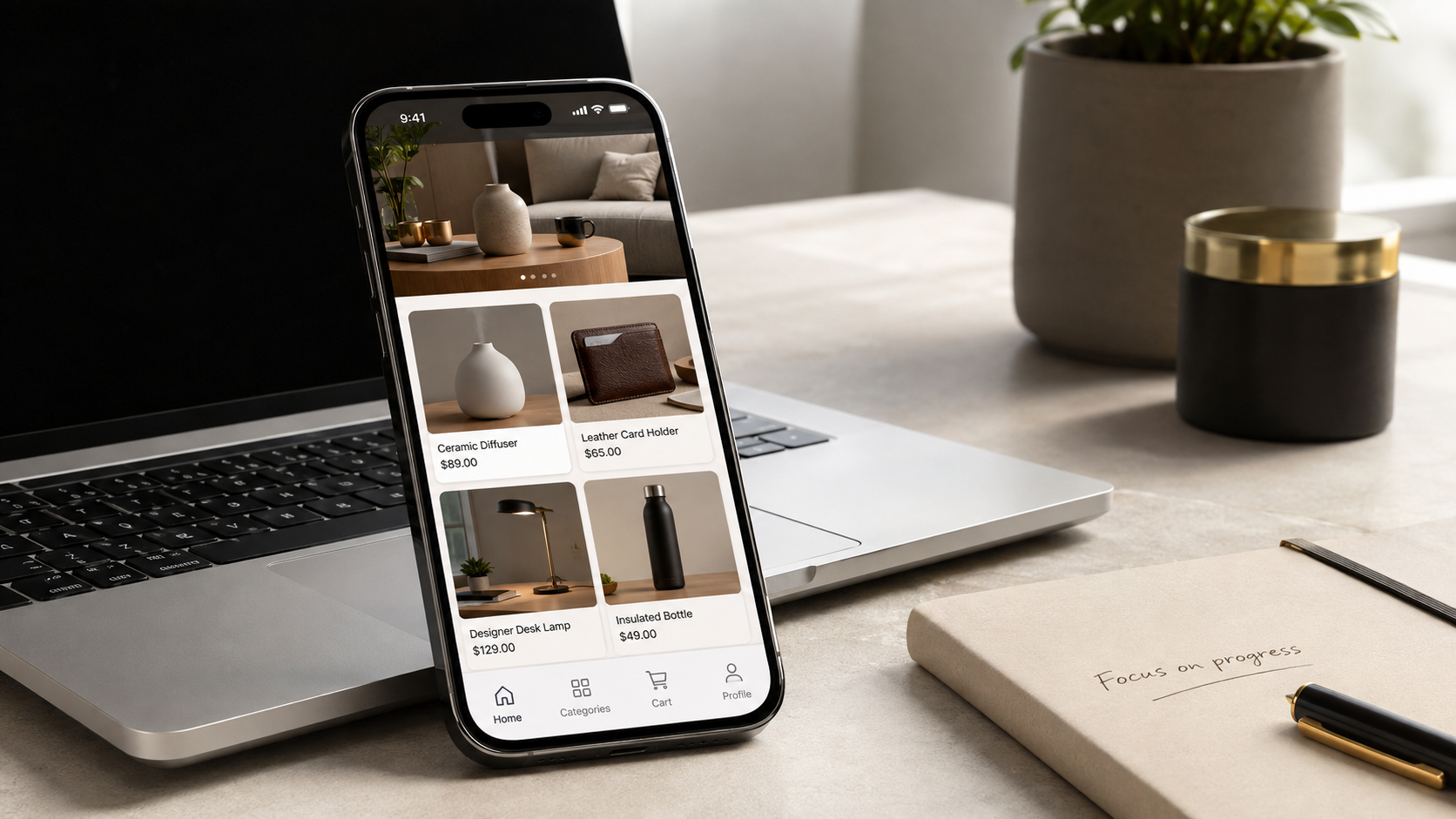
So the builder starts from a sentence. "A coffee roastery in Kyiv selling beans and merch" is enough. What comes back is not a template with gaps; it is a storefront with a palette, a layout, written copy and example products in the categories your kind of shop actually has.
What it writes, and what it does not
It writes the shop name if you have not given one, the section headings, the category names and example products with prices and descriptions. Those examples are marked as examples on purpose, so nothing accidentally goes on sale as a placeholder.
It does not invent claims about your business. What it produces is a shape to edit, not a description of a company it has never seen.
Preview before you commit anything
You see the storefront before connecting a bot. That order matters: the decision is about the shop itself, not about how much setup you were willing to do first. If it looks wrong, generate again with a different sentence.
Editing is the real work
Replace the example products with yours, swap the photos, adjust the palette if the generated one is not your brand. The theme is parametric, so a colour change is a colour change and not a redesign. If you prefer to start from something curated instead, there are more than a hundred ready-made designs across more than thirty niches, and applying one keeps your products in place.
Then it goes live in Telegram
Connect your bot and the shop opens inside the chat. Your channel becomes the front door, the buyer taps a button, and the order arrives with their Telegram handle. On the free plan that covers up to 10 products and 150 orders a month, which is enough to see whether the idea works before paying for it.