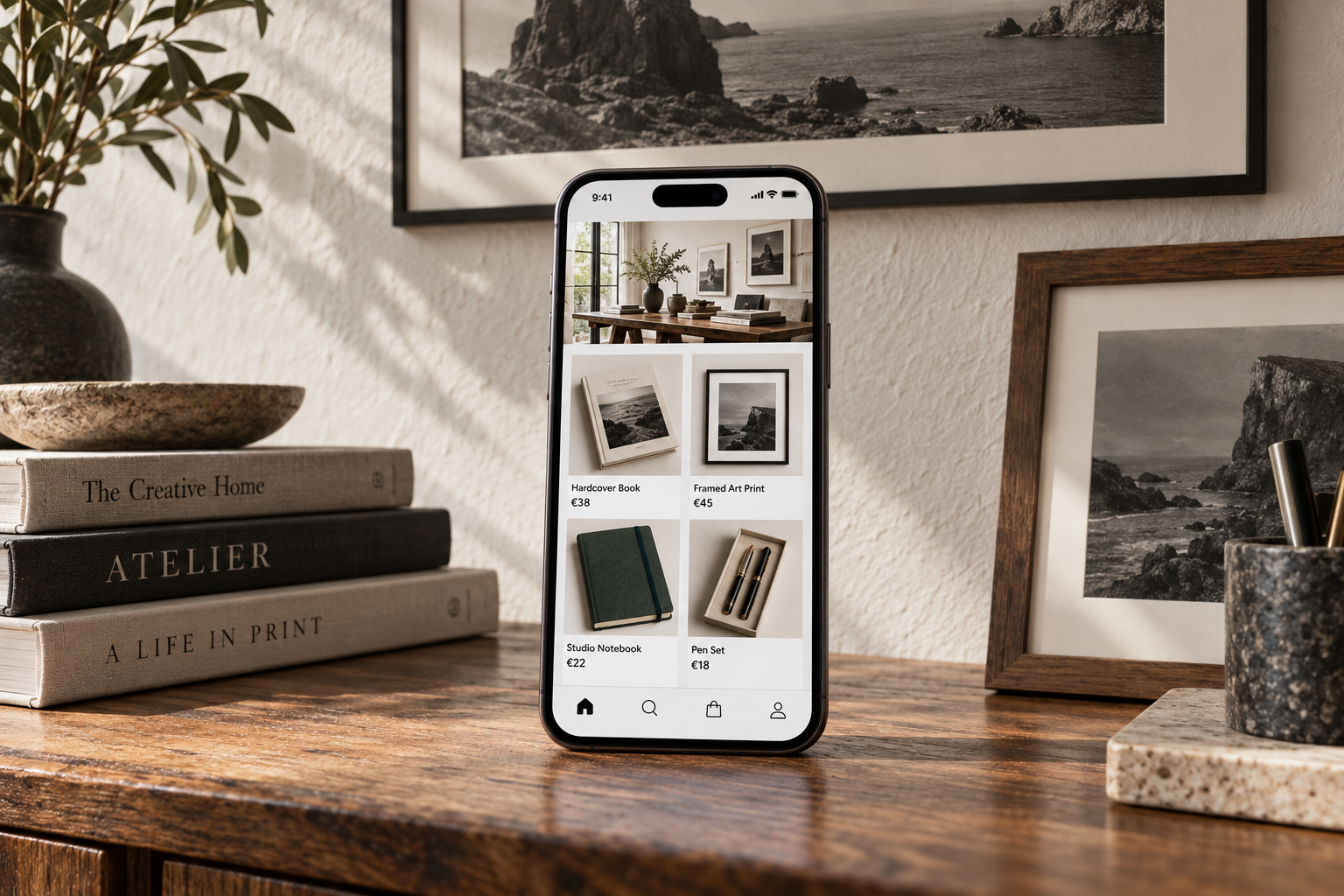
Why prints are hard to sell from a feed
A print is bought on detail. Paper weight, the width of the border, whether the black is really black. A social feed crops all of that away and puts your work next to an advert. A shop that opens inside the chat gives each piece a page of its own, at the size you chose, with the description you wrote.
The second problem is the follow-up. Buyers ask about framing, shipping tubes and delivery dates, and those questions arrive in a message thread. If your shop lives elsewhere, you answer in one place and sell in another.
Set the catalogue up around sizes
Most print shops sell the same image in two or three sizes, sometimes framed and unframed. Make each of those its own product with its own photo, or use one product with options so the buyer chooses on the page rather than in a message to you.
Photograph the print on a wall, not flat on a desk. A buyer is trying to imagine it in a room, and a scale reference does more for the sale than another close-up of the paper grain.
Write the packing and shipping into the page
Say how the print ships, rolled or flat, and how long it takes. A line about a rigid tube and a signed certificate removes the two questions you would otherwise answer twenty times. Put it in the description, not in a pinned post somewhere.
What to do after the first sale
Keep the thread. Send a photo of the parcel before it goes out. Print buyers come back for a second piece more often than most categories, and the return usually starts from that same conversation rather than from a new search.
If your work sells in editions, keep the remaining count in the product description and update it as they go. Scarcity you can verify is worth more than scarcity you claim.